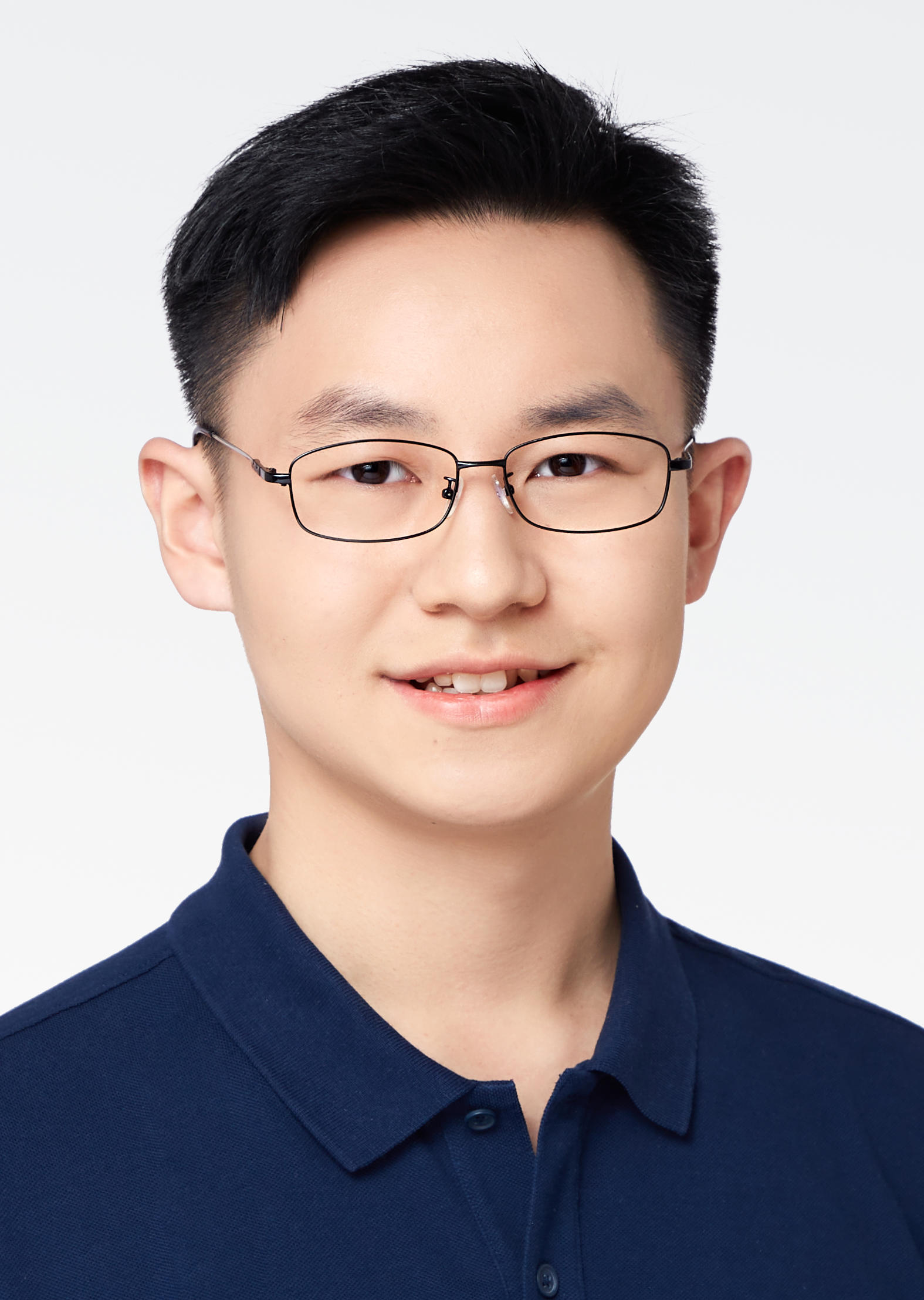
Personal Homepage
Welcome to my homepage! I am an MPhil student in Electronic Science and Technology at the University of Electronic Science and Technology of China (UESTC), currently supervised by Professor Lei Bi at the Lei Bi Group. My primary focus is on Silicon Photonics Device Design and Integrated Photonics Research. Leveraging the training from programs like the Lin Weigan Key Research Class and the Dongliang Program for Industry Talent Cultivation, I am committed to advancing the frontier technologies of Photonic Integrated Circuits (PICs) and exploring solutions for high-efficiency, low-power optoelectronic devices.
About Me
I completed my Bachelor’s degree in Electronic Science and Technology at UESTC (GPA: 3.82/4.0) and gained extensive research experience through various interdisciplinary projects. Currently, I specialize in the field of Silicon Photonics Device Design and Integrated Photonics, conducting comprehensive research from device simulation, structure optimization to process validation, in conjunction with advanced simulation software, design tools, and nanofabrication processes. My work is meticulously guided by Professor Lei Bi, and also benefits from the key cultivation platforms provided by the university, offering strong support for my innovation in research and practical applications.
Education Background
University of Cambridge
China Scholarship Council (CSC) Sponsored Joint M.Phil. Student Expected 2026 - 2027
Research Direction: Silicon Photonics Device Design and Integrated Photonics
University of Electronic Science and Technology of China, UESTC
M.Phil. in Electronic Science and Technology (A+) Expected June 2027
GPA: 3.86/4.0
Research Direction: Silicon Photonics Device Design and Integrated Photonics
Bachelor of Engineering in Electronic Science and Technology (A+) 2024
GPA: 3.82/4.0
Honors: Honorary Bachelor’s Degree (2 recipients from the School of Electronic Engineering in the current year)
Outstanding Graduate
Research Interests
Integrated Photonics
Research on the design, modeling, and performance optimization of various waveguide devices on silicon and SiN platforms, covering mode analysis, dispersion control, loss mechanisms, and polarization management. Dedicated to achieving high-performance, manufacturable photonic device designs through a combination of theory and simulation.
Waveguide Mode Control
Research on the capability of special cross-sections and periodic structures in controlling electromagnetic modes in waveguides, aiming to achieve targeted design of specific electric field modes and directions, serving the light field control of functional devices.
Heterogeneous Integrated Photonics
Research on integration methods, device design, and fabrication processes for combining various functional materials with mainstream photonic platforms such as silicon-based and SiN. Focused on exploring how to merge the advantageous properties of different materials onto a single chip through heterogeneous integration techniques, with the aim of developing novel multifunctional integrated photonic devices.
Research Experience
National Engineering Research Center for Electromagnetic Radiation Control Materials (State Key Laboratory), Chengdu, China
Polarization-Independent Ultra-Broadband Integrated Magneto-Optical Isolator
Project Duration: Mar 2025 - Present
- Simultaneously addressed major challenges in integrated isolators: polarization dependence and bandwidth limitation.
- Solved the polarization sensitivity issue by achieving effective magneto-optic interaction between TE/TM modes.
- For TE and TM modes, respectively achieved 20 dB theoretical isolation bandwidths of 239.88 nm and 295.83 nm.
Polarization-Independent Magneto-Optic Waveguide Based on Vortex Propagation
Project Duration: Sep 2024 - Present
- Designed periodic waveguide structures to excite vortex-like electric field resonance.
- Solved the polarization sensitivity issue by achieving effective magneto-optic interaction between TE/TM modes.
- Introduced the concept of vortex resonators to realize on-chip polarization-independent nonreciprocal phase effect.
Topological Multimode Integration and Control
Project Duration: Mar 2023 - Nov 2023
- Realized stable beam combination using topological multimodes in photonic crystals.
- Solved scattering loss issues by exciting with power orthogonal modes.
- Achieved 93% combination efficiency and dynamic control of high-power multi-channel systems.
Broadband Magneto-Optic Isolator and Circulator on Si₃N₄
Project Duration: Mar 2022 - Nov 2022
- Designed a Mach-Zehnder Interferometer with scattering cavities to achieve balanced phase shift.
- Achieved broadband nonreciprocal working characteristics by manipulating waveguide dispersion to break zero limit.
- Achieved 28 dB isolation, 29–90 nm bandwidth, and <3 dB loss, supporting scalable wavelength division multiplexing, LiDAR, and data communication applications.
Core Skills
Silicon Photonics Device Design and Modeling
- Silicon Photonics Device Design: Proficient in the design and analysis of waveguide devices on the silicon photonics platform, including splitters, modulators, filters, circulators, couplers, etc. Systematically masters single-mode/multimode design principles, phase matching conditions, and polarization control methods (e.g., polarization beam splitter design).
- Mode Theory Analysis: Skilled in performing silicon photonic waveguide structure modeling and light field distribution analysis (TE/TM modes) based on mode theory (mode solving, effective index method, transverse confinement conditions).
- Dispersion and Loss Optimization: Deep understanding of waveguide dispersion (material/structure dispersion) and various loss mechanisms (transmission, bending, coupling loss), capable of targeted optimization of device performance.
- Special Mode Customization: Skilled in combining theoretical design with special cross-section structures and periodic structures to realize specific modes, capable of targeted design of electric field modes and directions.
Electromagnetic Simulation and Multi-Physics Coupling Analysis
- Proficient in Lumerical: Proficiently use Lumerical to complete silicon photonic device structure design and performance optimization, supporting the entire process from initial modeling to parameter extraction.
- Proficient in COMSOL: Familiar with multi-physics simulation (thermo-optic, electro-optic, magneto-optic effects), capable of realizing coupled simulation analysis of temperature field-optical field, electric field-optical field in COMSOL.
- Design Automation: Assisted scripting (Python/MATLAB) for rapid structure iteration and optimization.
Understanding of Micro/Nanofabrication Processes
- Complete Process Flow: Familiar with the silicon-based process flow, possessing knowledge of the complete process chain from patterning (UV lithography/electron beam lithography) to etching (dry/wet etching) and thin film deposition (PECVD, sputtering, etc.).
- Fabrication Impact and Integrated Design: Understand the impact of actual fabrication on the performance of silicon photonic devices (such as waveguide loss, mode coupling efficiency, etc.), possessing a theoretical-simulation-fabrication integrated design mindset.
Magneto-Optic Devices and Functional Device Extension
- Masters the theory of magneto-optic effects (Faraday rotation, magneto-optic Kerr effect), possessing design capabilities for integrating magneto-optic materials on silicon-based platforms.
- Has modeling and optimization experience for functional devices such as magneto-optic isolators and magnetic field sensors.
Publications
Jing Y, Yang Y, Long W, Zhang T, Wu D, Wang J, Xiong Z, Chen N, Wang M, Chan CT, Yu Y, Bi L, Chen Y. Experimental Realization of Highly Efficient Beam Combination and Steering via Topological Multimode, Laser & Photonics Reviews (2025).
Awards and Achievements
Special Honors
- 2024 UESTC Honors Bachelor’s Degree (Top 2 in the Department this year)
- 2024 UESTC Excellent Graduate
- 2024 UESTC Honors Research Certificate
International Awards
- 2021 International Genetically Engineered Machine (iGEM) Competition International Gold Medal
- 2021 IEEEXtreme Programming Competition Global Top 5%
Other Awards
- 2024 Departmental Science and Technology Innovation Competition ‘Electronic Star’ Honor
- 2023 Dongliang Program Challenge Task II First Prize
- 2023 Dongliang Program Challenge Task III First Prize
- 2023 UESTC New Engineering Education Course Learning Best Work First Prize
- 2022 Dongliang Program Challenge Task I Best Team
- 2021 China-U.S. Young Maker Competition Provincial Second Prize
- 2020 National University Student Biomedical Engineering Innovation Design Competition University Level Third Prize
Interdisciplinary Innovation Projects
During my undergraduate studies, I took courses in Artificial Intelligence and Biology and participated in several interdisciplinary projects, such as:
Neural Network-Based Modeling for Ink Dot Recognition and Removal
Independently built a dataset and used ResNet network to achieve ink dot recognition in complex environments, providing precise technical support for robotic arm control.
Application of Recombinant Deinking Enzymes and Cellulosome System in Waste Paper Recycling
Explored new environmentally friendly processes for waste paper recycling using protein structure prediction and molecular docking techniques. Obtained Chinese Invention Patent “Method and Device for Deinking Whole Paper Based on Biological Enzymes”. Click here for details on specific work and project
Academic and Social Activities
IEEE Chapter Member
Actively participates in UESTC IEEE Chapter activities, engages in academic exchanges with scholars at home and abroad, participates in organizing academic workshops and student outreach programs, and keeps abreast of industry frontiers.
Key Cultivation Programs
As a member of programs such as the Lin Weigan Key Research Class and the Dongliang Program for Industry Talent Cultivation, I continuously broaden my academic horizons and actively participate in interdisciplinary collaborative projects, laying a solid foundation for future technological innovation.
Contact Me
- Email: weihanlong@std.uestc.edu.cn
- GitHub: https://github.com/LongWeihan